History of Solar Energy Development
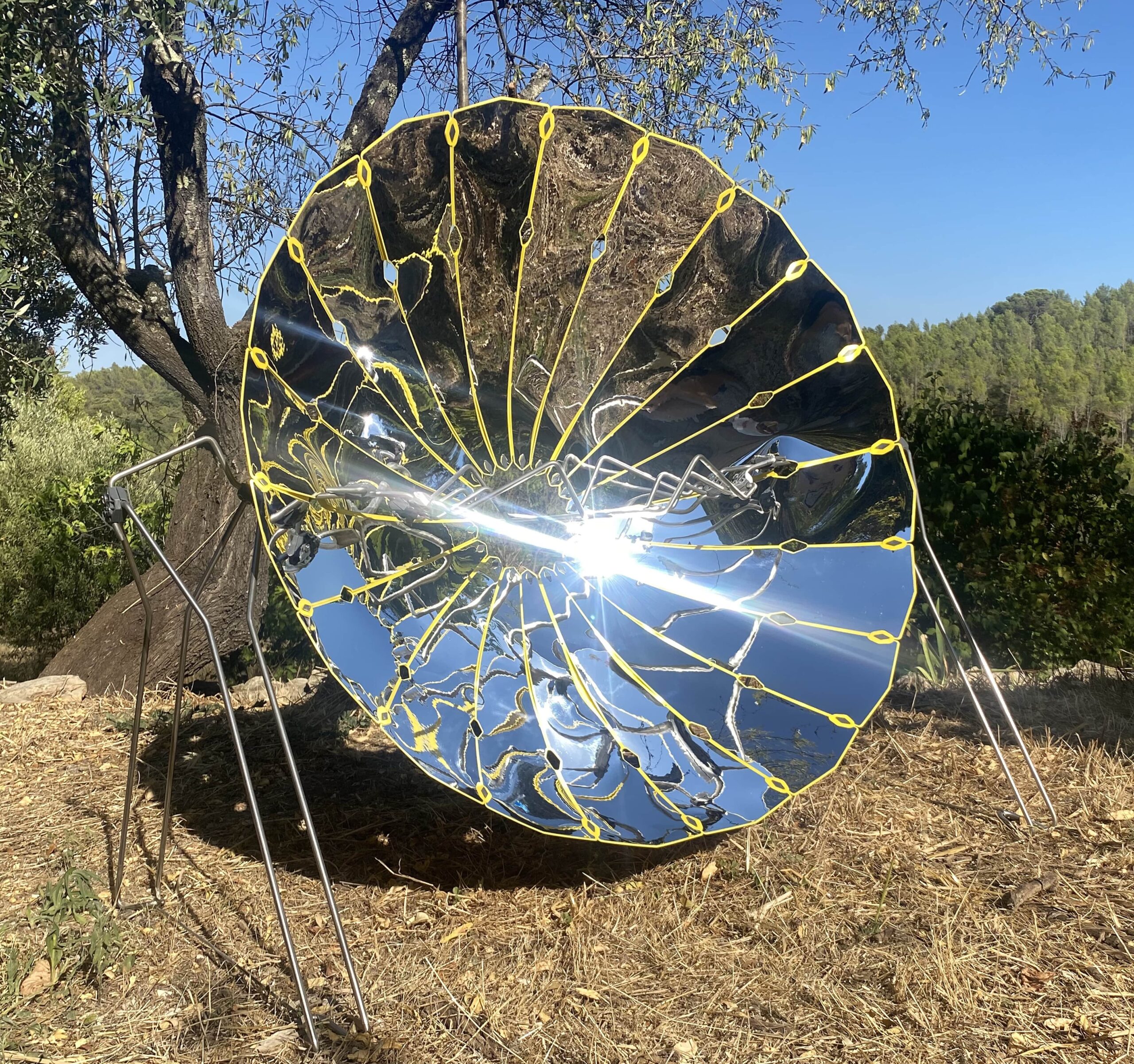

The history of solar energy development is a fascinating journey that spans centuries of scientific discovery, technological innovation, and growing environmental awareness. From early experiments using sunlight to create heat, to today’s massive solar farms generating electricity for millions of homes, solar energy has evolved into one of the most important renewable energy sources in the world.
Early Uses of Solar Energy
Humans have used solar energy for thousands of years, long before modern technology existed. Ancient civilizations such as the Greeks, Romans, and Chinese designed buildings to capture sunlight for warmth. Homes were often constructed with large south-facing windows to maximize heat during winter months.
In the 18th century, scientists began experimenting with devices that could harness solar heat. In 1767, Swiss scientist Horace-Bénédict de Saussure built one of the first solar ovens. His invention used glass layers to trap heat, demonstrating the greenhouse effect. These early experiments laid the foundation for future solar technologies.
Discovery of the Photovoltaic Effect (1839)
A major breakthrough occurred in 1839 when French physicist Edmond Becquerel discovered the photovoltaic effect. While experimenting with metal electrodes in a conductive solution, he observed that electricity increased when exposed to sunlight.
Although Becquerel did not fully understand the science behind his discovery, his work proved that light could be converted into electricity. This discovery became the scientific basis for modern solar panels.
Development of Early Solar Cells (Late 19th Century)
In 1873, British engineer Willoughby Smith discovered that selenium was photoconductive—it could conduct electricity when exposed to light. Building on this finding, in 1883, American inventor Charles Fritts created the first solid-state solar cell using selenium coated with a thin layer of gold.
However, Fritts’ solar cell was only about 1% efficient, meaning it converted very little sunlight into electricity. While it demonstrated the concept, it was not practical for widespread use.
Einstein and the Photoelectric Effect (1905)
In 1905, Albert Einstein published a paper explaining the photoelectric effect, providing the theoretical explanation for how light can generate electricity. His work showed that light consists of particles called photons, which can transfer energy to electrons.
Einstein’s explanation helped scientists better understand the science behind solar cells. He later received the Nobel Prize in Physics in 1921 for this work. His theory was crucial in advancing photovoltaic technology.
The First Practical Silicon Solar Cell (1954)
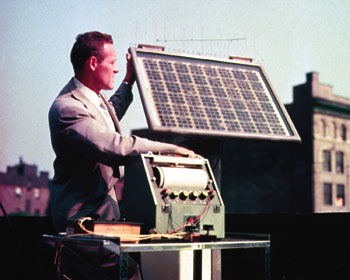
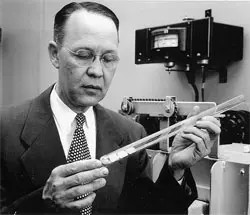
A major turning point in solar energy development came in 1954 at Bell Laboratories. Scientists Calvin Fuller, Daryl Chapin, and Gerald Pearson developed the first practical silicon solar cell.
This new solar cell had an efficiency of about 6%, a significant improvement over earlier designs. For the first time, solar cells were capable of powering small electrical devices. The invention marked the beginning of modern photovoltaic technology.
Although promising, early solar panels were extremely expensive and mainly used for research purposes.
Solar Energy in Space (1950s–1960s)
The space race played a crucial role in advancing solar technology. In 1958, the satellite Vanguard 1 used solar cells to power its radio transmitter. Solar panels proved ideal for space missions because they provided reliable energy without the need for fuel.
During the 1960s, solar technology improved rapidly as governments invested heavily in research for space exploration. Solar panels became standard equipment on satellites and spacecraft.
The Energy Crisis and Growing Interest (1970s)
The oil crisis of the 1970s significantly increased global interest in alternative energy sources. As oil prices rose and energy shortages occurred, governments began investing in renewable energy research, including solar power.
The United States established the Solar Energy Research Institute (now the National Renewable Energy Laboratory) to advance renewable energy technologies. During this time, improvements in manufacturing processes gradually reduced the cost of solar panels.
Technological Advancements (1980s–1990s)
Throughout the 1980s and 1990s, solar panel efficiency steadily improved while production costs decreased. Thin-film solar cells were developed as a lightweight and flexible alternative to traditional silicon panels.
Countries such as Germany and Japan introduced government incentives and subsidy programs to encourage solar adoption. These policies helped expand the solar industry and stimulate global market growth.
Rapid Global Expansion (2000s)
The early 21st century marked a period of rapid expansion in solar energy development. China emerged as a major manufacturer of solar panels, significantly lowering global prices through large-scale production.
Governments worldwide implemented feed-in tariffs, tax credits, and renewable energy targets. Solar farms began appearing in deserts and open landscapes, generating electricity on a massive scale.
Technological advancements increased panel efficiency to over 15–20%, making solar energy competitive with fossil fuels in many regions.
Modern Innovations (2010s–Present)
In recent years, solar energy has become one of the fastest-growing energy sources globally. Advancements include:
- Bifacial panels that capture sunlight from both sides
- Perovskite solar cells with potential for higher efficiency
- Floating solar farms installed on reservoirs
- Solar battery storage systems for energy independence
Energy storage technologies, particularly lithium-ion batteries, have improved the reliability of solar systems by allowing excess energy to be stored for nighttime use.
Large-scale solar power plants now generate gigawatts of electricity, powering millions of homes while reducing carbon emissions.
Environmental and Economic Impact
The development of solar energy has had a major environmental impact. Solar power produces electricity without emitting greenhouse gases during operation, helping reduce climate change.
Economically, the solar industry has created millions of jobs worldwide in manufacturing, installation, research, and maintenance. As costs continue to decline, solar energy is becoming more accessible to developing nations.
Challenges in Solar Development
Despite its progress, solar energy faces challenges:
- Intermittency due to weather and nighttime
- Energy storage limitations
- Land use for large solar farms
- Recycling and disposal of old panels
Researchers continue working to improve efficiency, reduce material waste, and develop better recycling systems.
The Future of Solar Energy
The future of solar energy looks promising. Continued research aims to increase efficiency beyond current limits while lowering costs further. Integration with smart grids and improved battery systems will enhance reliability.
As nations work toward reducing carbon emissions and transitioning to clean energy, solar power is expected to play a central role in global energy systems.
Conclusion
The history of solar energy development reflects centuries of scientific curiosity and technological innovation. From early solar ovens to advanced photovoltaic cells, solar energy has evolved into a powerful and practical solution to global energy challenges.
Key discoveries, such as Edmond Becquerel’s photovoltaic effect, Albert Einstein’s explanation of the photoelectric effect, and the creation of the first practical silicon solar cell at Bell Laboratories, paved the way for modern solar technology.
Today, solar energy stands as one of the most promising renewable energy sources. As technology continues to advance and costs decline, solar power will remain a cornerstone of the transition toward a cleaner, more sustainable future.