How Solar Thermal Energy Works (Detailed Article)

Solar thermal energy is a powerful renewable energy technology that captures sunlight and converts it into heat. Unlike solar photovoltaic (PV) systems that directly convert sunlight into electricity, solar thermal systems use the Sun’s energy to produce thermal energy, which can then be used for heating, hot water, industrial processes, or electricity generation. This technology plays a significant role in reducing reliance on fossil fuels and lowering greenhouse gas emissions.
Understanding Solar Thermal Energy
Solar thermal energy works by absorbing sunlight and transforming it into heat using special collectors or mirrors. The basic principle behind solar thermal systems is simple: sunlight heats a fluid, and that heat is either used directly or converted into electricity.
The primary energy source for solar thermal systems is the Sun. The Sun continuously emits radiation in the form of light and heat. When this radiation reaches Earth, it can be harnessed using specially designed equipment.
Solar thermal systems can be divided into three main categories:
- Low-temperature systems (used for water heating and space heating)
- Medium-temperature systems (used for commercial and industrial heating)
- High-temperature systems (used for electricity generation in power plants)
Each type operates on similar principles but differs in scale and technology.
Basic Working Principle
The operation of a solar thermal system generally involves the following steps:
- Collection of Sunlight
Solar collectors or mirrors capture sunlight and absorb its heat. - Heat Transfer
The collected heat is transferred to a working fluid such as water, oil, or molten salt. - Heat Storage (Optional)
The heated fluid may be stored in insulated tanks to be used later. - Energy Use
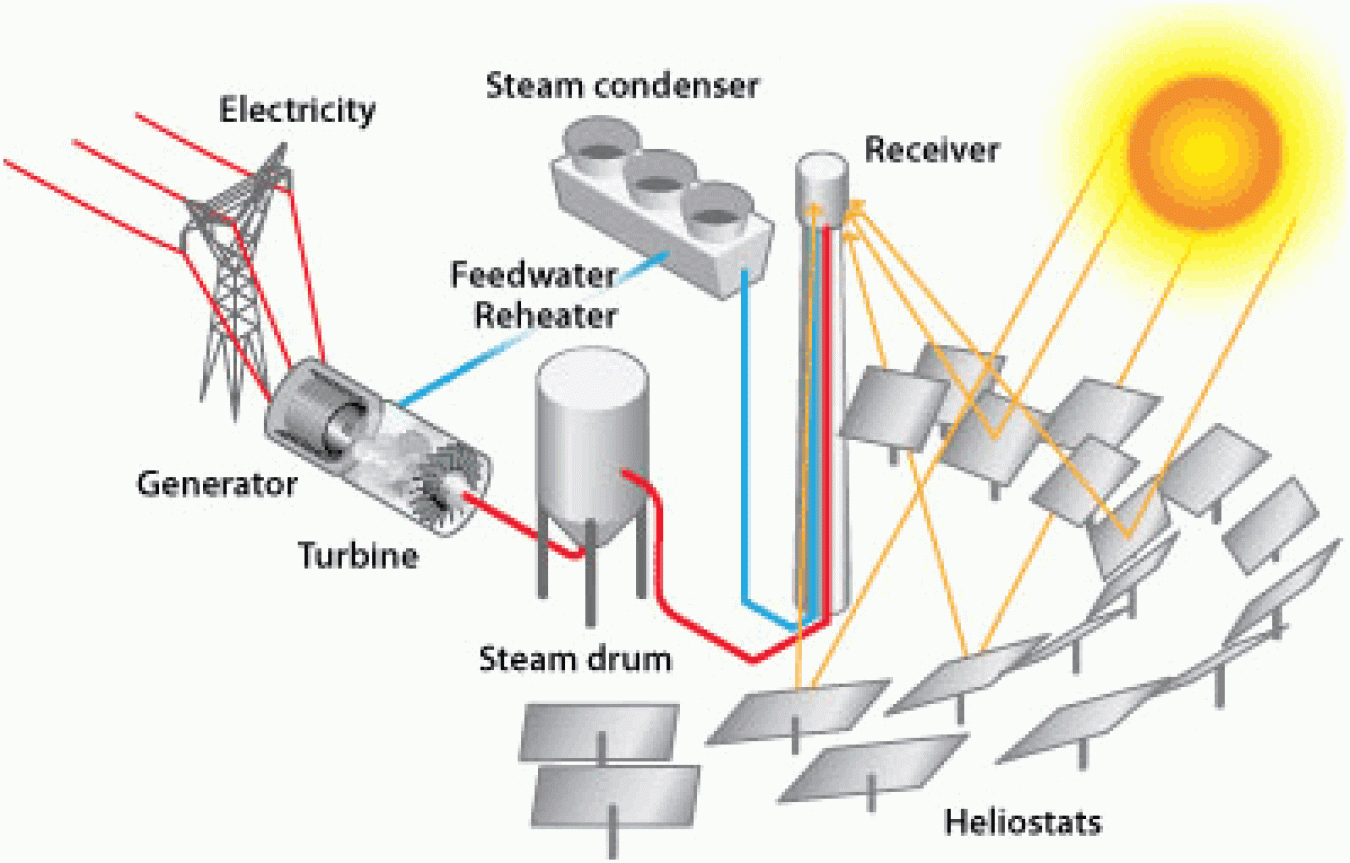
The thermal energy is used directly for heating or to produce steam that drives a turbine connected to a generator for electricity production.
The key difference between solar thermal and photovoltaic systems is that solar thermal relies on heat, not direct electron movement.
Solar Collectors: The Core Component
Solar collectors are devices designed to absorb and retain heat from sunlight. There are several types of collectors used in solar thermal systems:
1. Flat-Plate Collectors
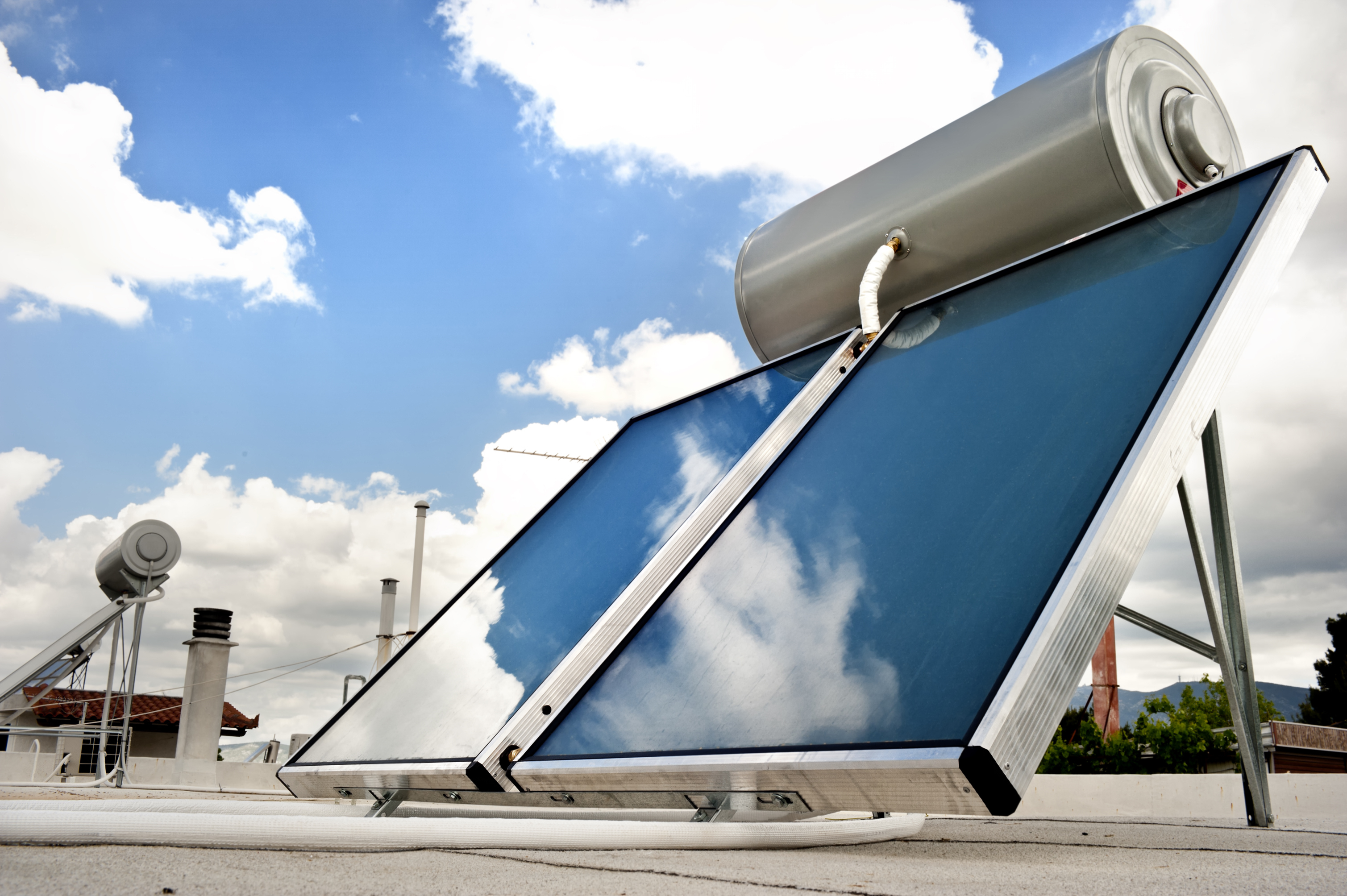
Flat-plate collectors are commonly used in residential solar water heating systems. They consist of:
- A dark absorber plate
- Transparent glass cover
- Insulated backing
- Tubes carrying water or heat-transfer fluid
When sunlight passes through the glass cover, it heats the absorber plate. The heat is transferred to water flowing through the tubes. This warm water is then stored in a tank for household use.
Flat-plate collectors are simple, durable, and cost-effective, making them ideal for homes.
2. Evacuated Tube Collectors
Evacuated tube collectors are more efficient than flat-plate collectors, especially in cold climates. They consist of glass tubes with a vacuum between layers. The vacuum reduces heat loss, allowing the system to maintain higher temperatures.
These systems are widely used for residential and commercial water heating where higher efficiency is required.
Concentrated Solar Power (CSP)
For large-scale electricity generation, solar thermal systems use a technology known as Concentrated Solar Power (CSP). CSP systems use mirrors or lenses to focus sunlight onto a small area, generating extremely high temperatures.
There are several main types of CSP systems:
1. Parabolic Trough Systems
Parabolic trough systems use long, curved mirrors shaped like a trough. These mirrors focus sunlight onto a receiver tube placed along the focal line. A heat-transfer fluid flows through the tube and is heated to high temperatures (often above 400°C).
The hot fluid is used to produce steam, which drives a turbine connected to a generator.
2. Solar Power Tower Systems
Power tower systems use a large field of mirrors called heliostats. These mirrors track the Sun and reflect sunlight onto a central tower. At the top of the tower, a receiver absorbs the concentrated sunlight and heats a fluid, often molten salt.
Molten salt can retain heat for long periods, allowing electricity production even after sunset. This storage capability is a major advantage of solar thermal power plants.
3. Dish/Engine Systems
Dish systems use a parabolic dish-shaped mirror to focus sunlight onto a receiver at the focal point. The concentrated heat drives an engine (often a Stirling engine) to generate electricity. These systems are smaller and can be used in remote locations.
Heat Storage in Solar Thermal Systems
One of the biggest advantages of solar thermal energy is its ability to store heat efficiently. Thermal storage systems allow energy to be saved and used when sunlight is not available.
Molten salt is commonly used in large-scale plants because it can store heat at very high temperatures with minimal loss. The stored heat can be used to produce steam and generate electricity even at night or during cloudy weather.
This storage capability gives solar thermal systems an advantage over some other renewable energy technologies that depend directly on real-time sunlight.
Applications of Solar Thermal Energy
Solar thermal systems have a wide range of applications:
1. Water Heating
One of the most common uses is residential and commercial water heating. Solar water heaters can significantly reduce electricity or gas consumption.
2. Space Heating
Buildings can use solar thermal systems to heat indoor spaces, especially in colder climates.
3. Industrial Processes
Many industries require heat for processes such as drying, cooking, or chemical production. Solar thermal systems can provide this heat sustainably.
4. Electricity Generation
Large-scale CSP plants generate electricity for thousands of homes by using steam turbines similar to those in fossil fuel power plants.
Advantages of Solar Thermal Energy
Solar thermal energy offers several benefits:
- Renewable and sustainable
- Low greenhouse gas emissions
- Energy storage capability
- Reduced dependence on fossil fuels
- Lower long-term operating costs
It is especially effective in regions with high sunlight exposure.
Limitations and Challenges
Despite its advantages, solar thermal energy has some challenges:
- High initial installation cost
- Requires large land areas for power plants
- Dependent on sunny weather conditions
- Water usage for steam production in some systems
Research continues to improve efficiency, reduce costs, and minimize environmental impact.
Environmental Impact
Solar thermal systems produce minimal air pollution during operation. However, manufacturing materials, constructing large plants, and land use must be carefully managed to reduce environmental effects.
Compared to fossil fuels, solar thermal energy dramatically lowers carbon emissions and helps combat climate change.
Future of Solar Thermal Technology
Advancements in materials, thermal storage systems, and hybrid renewable plants are improving performance. Researchers are developing higher-efficiency collectors and better heat storage solutions to increase reliability.
In regions with abundant sunlight, solar thermal energy has strong potential to supply clean and stable power for decades to come.
Conclusion
Solar thermal energy works by capturing sunlight and converting it into heat, which can then be used directly or transformed into electricity. Through collectors, mirrors, heat-transfer fluids, and turbines, solar thermal systems harness the Sun’s energy efficiently and sustainably.
From simple residential water heaters to massive concentrated solar power plants, solar thermal technology offers a versatile and environmentally friendly solution to global energy needs. As technology advances and costs decrease, solar thermal energy is expected to play an increasingly important role in the transition toward a cleaner and more sustainable energy future.