Solar Flares & Space Weather – Detailed Article

Solar flares and space weather are powerful phenomena that originate from our closest star, the Sun. Although the Sun appears calm from Earth, it is actually a highly dynamic and active star. Explosions on its surface can release enormous amounts of energy, affecting satellites, communication systems, astronauts, and even power grids on Earth. Understanding solar flares and space weather is essential in today’s technology-dependent world.
What Are Solar Flares?
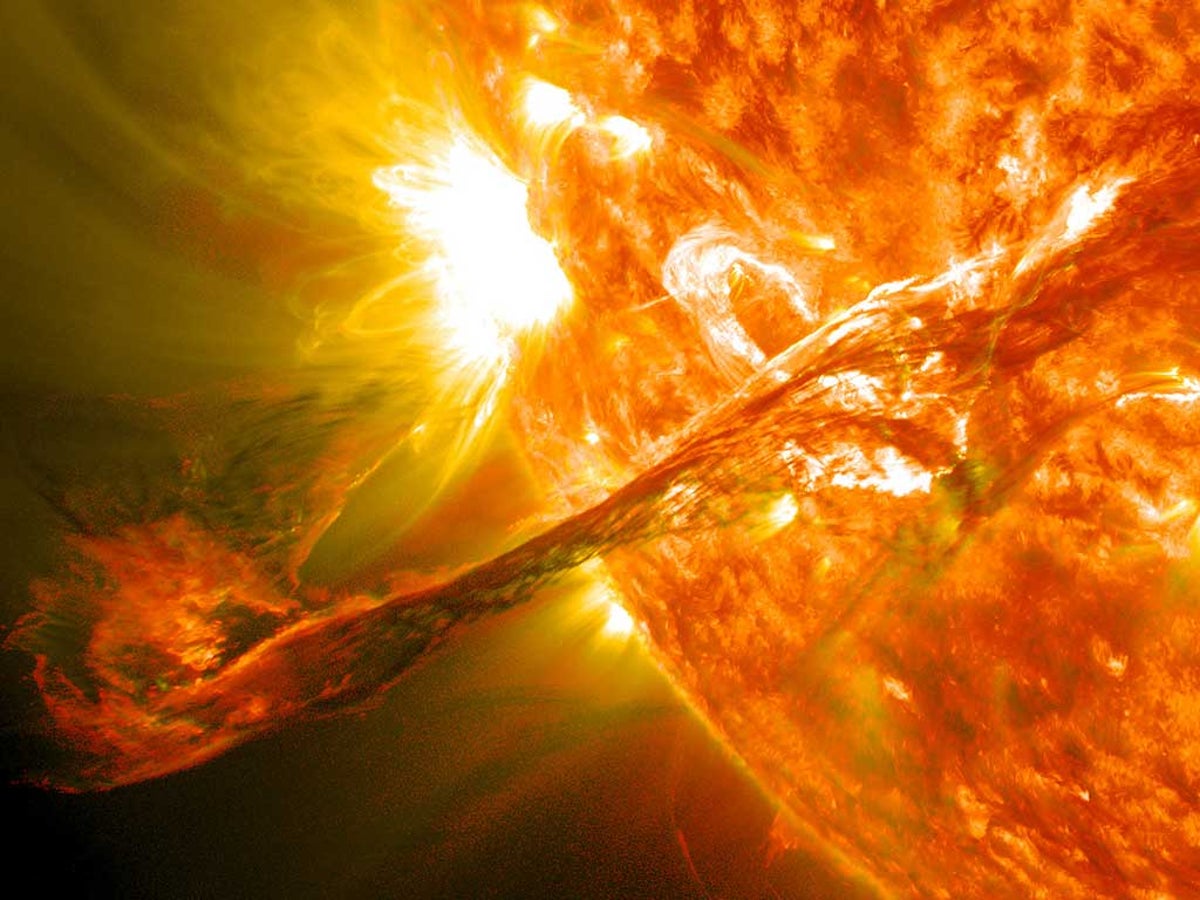
A solar flare is a sudden, intense burst of radiation that occurs when magnetic energy stored in the Sun’s atmosphere is released. These flares are among the most powerful explosions in the Solar System. They occur in active regions around sunspots, where magnetic fields are especially strong and complex.
Solar flares release energy equivalent to millions of hydrogen bombs exploding at once. This energy travels through space in the form of electromagnetic radiation, including:
- X-rays
- Ultraviolet radiation
- Visible light
- Radio waves
The radiation from a solar flare reaches Earth in about 8 minutes—the time it takes sunlight to travel from the Sun to Earth.
What Causes Solar Flares?
The Sun is made of hot plasma—charged particles that move constantly. This movement creates powerful magnetic fields. Sometimes, these magnetic field lines become twisted and tangled due to the Sun’s rotation and convection processes.
When the magnetic tension becomes too strong, the field lines suddenly snap and reconnect in a process called magnetic reconnection. This releases massive amounts of energy in the form of a solar flare.
Solar flares usually occur near sunspots, which are darker, cooler regions on the Sun’s surface caused by intense magnetic activity.
Classification of Solar Flares
Scientists classify solar flares based on their intensity using a letter-based system:
- A-class: Smallest and weakest
- B-class: Slightly stronger
- C-class: Minor flares with little impact on Earth
- M-class: Moderate flares that can cause brief radio blackouts
- X-class: The most powerful flares with significant effects on Earth
Each class is ten times stronger than the previous one. For example, an X-class flare is ten times stronger than an M-class flare.
Coronal Mass Ejections (CMEs)
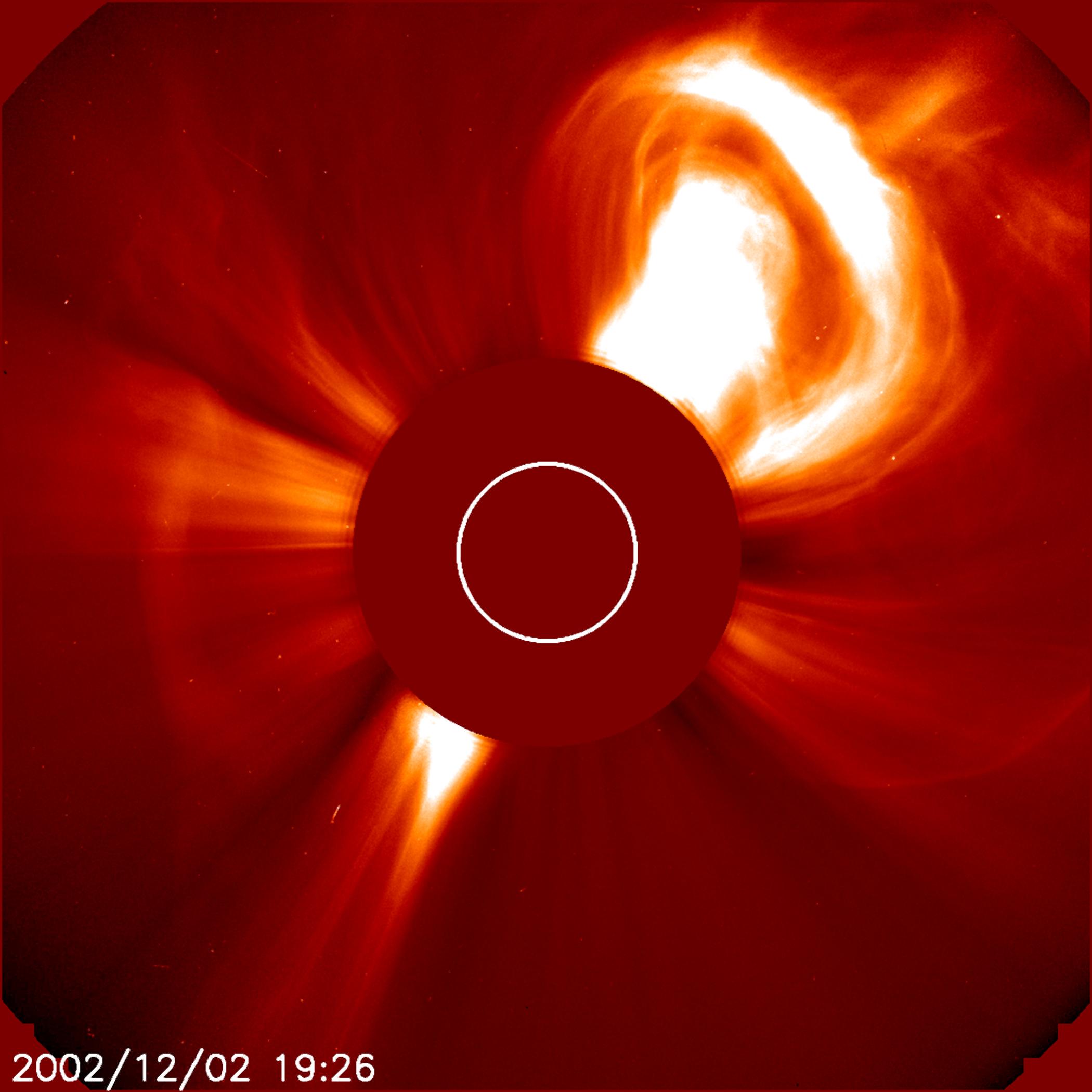
Solar flares are often associated with Coronal Mass Ejections (CMEs). A CME is a massive cloud of charged particles and plasma that is ejected from the Sun’s corona into space.
While solar flares mainly release radiation, CMEs release physical matter. If a CME is directed toward Earth, it can collide with our planet’s magnetic field and cause geomagnetic storms.
Unlike flare radiation, which arrives in minutes, CMEs typically take 1 to 3 days to reach Earth.
What Is Space Weather?
Space weather refers to the environmental conditions in space influenced by the Sun’s activity. Just as Earth has weather in its atmosphere, space has weather caused by solar radiation, solar wind, flares, and CMEs.
Space weather can affect:
- Satellites
- GPS systems
- Radio communications
- Power grids
- Astronaut safety
- Airline flights near polar regions
Monitoring space weather is critical for protecting modern technology.
Effects of Solar Flares on Earth
1. Radio Blackouts
Strong solar flares emit intense X-rays that can disturb Earth’s ionosphere—the upper layer of the atmosphere responsible for reflecting radio signals. This disruption can cause temporary radio blackouts, especially affecting aviation and maritime communications.
2. Satellite Damage
High-energy particles from solar storms can damage satellite electronics, disrupt navigation systems, and shorten satellite lifespans.
3. Power Grid Disturbances
Large geomagnetic storms caused by CMEs can induce electrical currents in power lines. These currents can overload transformers and lead to widespread power outages.
One famous example occurred in 1989 when a geomagnetic storm caused a major blackout in Quebec, Canada.
4. Aurora Displays
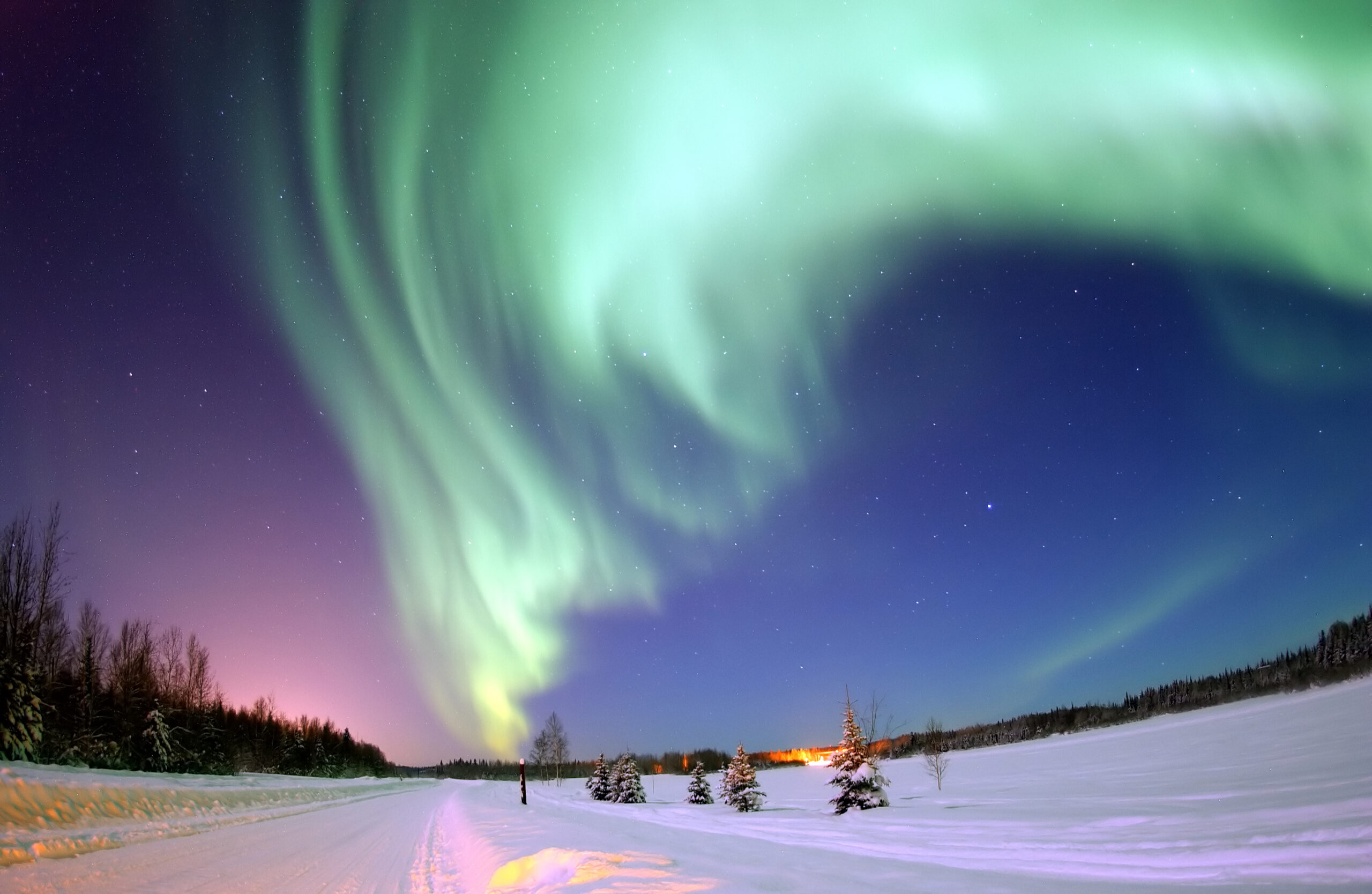
Not all effects of solar storms are harmful. When charged particles from the Sun collide with Earth’s atmosphere, they create beautiful light displays known as auroras:
- Aurora Borealis (Northern Lights) in the Northern Hemisphere
- Aurora Australis (Southern Lights) in the Southern Hemisphere
These colorful lights occur near the polar regions and are a visible sign of solar activity.
The Solar Cycle
The Sun follows an approximately 11-year cycle known as the solar cycle. During solar maximum, the Sun experiences increased sunspot activity, more solar flares, and more frequent CMEs. During solar minimum, activity decreases.
Scientists track the solar cycle to predict periods of increased space weather activity. We are currently in Solar Cycle 25, which began in 2019 and is expected to peak around the mid-2020s.
How Scientists Monitor Solar Activity
Space agencies continuously monitor the Sun using satellites and space telescopes. Some important missions include:
- Solar Dynamics Observatory (SDO)
- Parker Solar Probe
- SOHO
These spacecraft observe the Sun’s surface, atmosphere, and solar wind. Their data help scientists predict solar storms and issue warnings to protect technology and infrastructure.
Impact on Astronauts and Space Missions
Astronauts outside Earth’s protective magnetic field are more vulnerable to solar radiation. During intense solar storms, astronauts on space missions may need to take shelter in shielded areas of their spacecraft.
Future missions to the Moon and Mars must carefully consider space weather risks, as these locations lack Earth’s strong magnetic protection.
Can Solar Storms Threaten Life on Earth?
Earth’s magnetic field and atmosphere provide strong protection against most harmful solar radiation. While extreme solar storms can disrupt technology, they are unlikely to directly harm humans on the ground.
However, in a worst-case scenario similar to the 1859 Carrington Event—the most powerful geomagnetic storm ever recorded—modern infrastructure could face severe damage. Such events are rare but possible.
The Importance of Space Weather Forecasting
Because society relies heavily on satellites, GPS, and electrical systems, space weather forecasting has become increasingly important. Governments and research institutions maintain monitoring systems to provide early warnings of solar storms.
With accurate forecasting, power companies can temporarily shut down vulnerable systems, airlines can reroute flights, and satellite operators can protect equipment.
Conclusion
Solar flares and space weather are powerful reminders that the Sun is an active and dynamic star. Solar flares release intense radiation, while coronal mass ejections send charged particles into space. When directed toward Earth, these events can disrupt communication systems, damage satellites, and affect power grids.
At the same time, solar activity produces stunning natural phenomena like the Northern and Southern Lights. Through advanced space missions and continuous monitoring, scientists are improving their ability to predict and understand solar storms.
As technology continues to advance and humanity ventures further into space, understanding solar flares and space weather will remain essential for protecting both our planet and future space exploration.