Solar System Overview
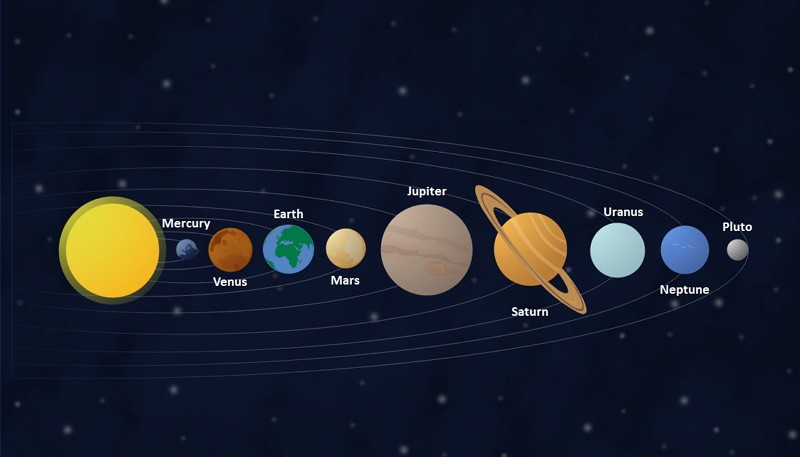
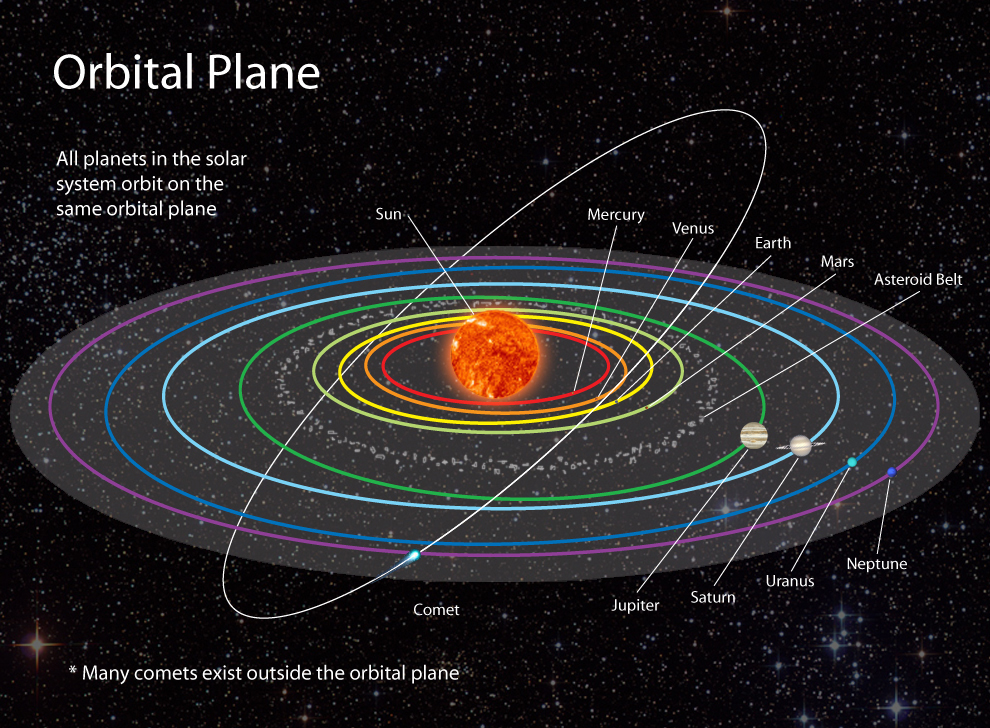


The Solar System is a vast and fascinating region of space centered around our star, the Sun. It includes eight planets, their moons, dwarf planets, asteroids, comets, and countless smaller objects, all bound together by gravity. Formed about 4.6 billion years ago, the Solar System is our cosmic neighborhood and the only known place in the universe where life exists. Understanding its structure and components helps us better comprehend Earth’s place in space and the forces that shape planetary systems.
The Sun: The Heart of the Solar System
At the center of the Solar System lies the Sun, a massive ball of hot, glowing gases composed mainly of hydrogen and helium. It contains more than 99% of the total mass of the Solar System. Through a process called nuclear fusion, hydrogen atoms combine to form helium, releasing enormous amounts of energy. This energy radiates outward as light and heat, making life on Earth possible.
The Sun’s gravity holds the entire Solar System together. Without it, planets and other objects would drift away into space. The Sun also influences space weather, including solar flares and coronal mass ejections, which can affect satellites and communications on Earth.
The Inner Planets
The four planets closest to the Sun are known as the terrestrial or rocky planets. These include:
- Mercury
- Venus
- Earth
- Mars
These planets are relatively small and have solid surfaces made of rock and metal.
Mercury is the smallest planet and the closest to the Sun. It experiences extreme temperature changes, from scorching heat during the day to freezing cold at night.
Venus is similar in size to Earth but has a thick atmosphere made mostly of carbon dioxide, creating a powerful greenhouse effect. As a result, it is the hottest planet in the Solar System.
Earth is unique because it supports life. It has liquid water, a protective atmosphere, and a suitable temperature range. Earth has one natural satellite, the Moon.
Mars, often called the Red Planet due to its reddish appearance, has the largest volcano and canyon in the Solar System. Scientists are studying Mars closely to determine whether life once existed there.
The Asteroid Belt
Between Mars and Jupiter lies the Asteroid Belt, a region filled with rocky objects called asteroids. These are remnants from the early Solar System that never formed into a planet due to Jupiter’s strong gravitational pull. While there are millions of asteroids, they are spread far apart and rarely collide.
The Outer Planets
Beyond the Asteroid Belt are the four giant planets, known as gas giants and ice giants:
- Jupiter
- Saturn
- Uranus
- Neptune
Jupiter is the largest planet in the Solar System. It is so massive that its gravity influences the orbits of other objects. Jupiter is famous for the Great Red Spot, a giant storm that has lasted for centuries.
Saturn is best known for its spectacular ring system, made of ice and rock particles. Like Jupiter, Saturn is composed mainly of hydrogen and helium.
Uranus is unique because it rotates on its side, likely due to a massive collision in the distant past. It has a pale blue color due to methane in its atmosphere.
Neptune, the farthest planet from the Sun, is known for its strong winds—the fastest recorded in the Solar System. It also has a deep blue color caused by methane.
Dwarf Planets
In addition to the eight main planets, the Solar System contains dwarf planets. One of the most well-known is Pluto, which was classified as a dwarf planet in 2006. Pluto resides in the Kuiper Belt, a distant region filled with icy bodies beyond Neptune.
Other dwarf planets include Eris, Haumea, and Makemake. Unlike the eight main planets, dwarf planets have not cleared their orbital paths of other debris.
The Kuiper Belt and Oort Cloud
Beyond Neptune lies the Kuiper Belt, a vast region containing icy objects and comets. It is similar to the Asteroid Belt but much larger and composed mainly of frozen materials.
Farther still is the Oort Cloud, a hypothetical spherical shell of icy objects believed to surround the Solar System at great distances. It is thought to be the source of long-period comets.
Moons and Other Objects
Many planets in the Solar System have natural satellites, or moons. Jupiter and Saturn alone have dozens of moons, some of which are larger than Mercury. For example, Jupiter’s moon Ganymede is the largest moon in the Solar System.
Comets are icy bodies that orbit the Sun. When they approach the Sun, they develop glowing tails due to the evaporation of ice. Meteoroids are smaller rocky fragments that can become meteors when they enter Earth’s atmosphere.
Formation of the Solar System
Scientists believe the Solar System formed from a giant cloud of gas and dust known as the solar nebula. Under gravity, the cloud collapsed and began to spin, forming a flat disk. The Sun formed at the center, while particles in the disk collided and stuck together to form planets and other objects.
This process, known as accretion, took millions of years. Over time, the Solar System evolved into the structure we observe today.
Importance of Studying the Solar System
Studying the Solar System helps scientists understand how planetary systems form and evolve. Space missions have provided valuable data about planets, moons, and asteroids. Robotic spacecraft have landed on Mars, flown past Pluto, and explored the outer planets.
Exploration also helps answer fundamental questions: How did life begin? Are we alone in the universe? Could humans live on other planets someday?
Conclusion
The Solar System is a complex and dynamic system centered around the Sun. It includes rocky inner planets, massive gas giants, icy dwarf planets, and countless smaller objects. Each component plays a role in shaping the cosmic environment we inhabit.
From the blazing surface of Mercury to the icy edges of the Kuiper Belt, the Solar System offers endless opportunities for discovery. By studying it, we gain not only scientific knowledge but also a deeper appreciation for the vast and intricate universe beyond our world.